
Freedom Colony & Churches That Support Them
Before emancipation was law, these congregations were already practicing freedom. They were not just houses of worship — they were schools, courthouses, mutual aid societies, and the places where families gathered in the dark to wait for a nation to catch up with what God had already declared.
The Night Watchers Started in the Church
Waiting for the WordIn the freedom colonies of Milam County — and across the South — churches became the gathering places for what history calls the Night Watches: vigils held in the hours before and after the Emancipation Proclamation took effect on January 1, 1863. Families who had been practicing freedom in private now waited together, in candlelight and prayer, for the law to say what they already knew in their bones.
The watch did not end with Lincoln's proclamation. These same congregations held vigil again through the long years of Reconstruction, gathering in prayer as the 14th Amendment moved through Congress — the amendment that would finally declare, in the language of the Constitution itself, that every person born on American soil was a citizen. Full stop. No asterisk. No exception for the color of their skin or the name their enslaver gave them.
The churches of Cox's Freedom Colony were not passive witnesses to this history. They were its engine. The Burton and Smith families — who had already donated land and a building to their free kin — worshipped alongside them in these same pews, waiting for the same morning. The night watches were not just Black gatherings. They were family gatherings. And in this colony, family crossed every line the law had drawn.
"They did not wait in silence. They waited in song."
The Black Israelite Church
Before Zion Hill. Before Mt. Tabor. There was one congregation near Sugarloaf Mountain in Gause — the Black Israelite Church, active in the early 1800s, decades before emancipation. When it split in the late 1800s, it did not fracture — it multiplied. The two oldest Baptist churches in the Gause freedom colony both trace their roots to this single, pre-emancipation congregation. Freedom was not new here. It had been practiced, in secret and in faith, for a generation before the law caught up.
The Four Oldest Documented African American Churches
Founded in the late 1860s through the 1870s — each one a pillar of a different freedom colony community, all connected by blood, faith, and the same determination to build something that could not be taken away.
Zion Hill Baptist Church
Gause, Milam County
One of the earliest post-emancipation Baptist congregations in the Gause freedom colony. Services began under brush arbors near the Little River Bottom, with community members raising the first structure by the 1870s. Zion Hill hosted revivals, literacy classes vital to Reconstruction-era survival, and mutual aid for sharecroppers. By the 1880s it relocated into Gause proper, becoming the spiritual anchor for burials at Peaceful Rest Cemetery — ground tied directly to the Malone and Smith lines. Still active today, Zion Hill embodies the colony's founding conviction: that freedom, once practiced, could not be taken back.
Emerged from the Black Israelite Church split — an early 1800s congregation near Sugarloaf Mountain.
Mt. Tabor Baptist Church
Two Mile Community, near Gause
Anchoring the Two Mile settlement at the heart of the family's freedom colony, Mt. Tabor shared space with the Two-Mile School (closed 1951), doubling as an educational site during Reconstruction to teach reading for voting rights. Burton family labor helped raise its log building. The church hosted missionary work to neighboring colonies and sustained community resilience through generations of Smith Bottom gatherings and Mt. Tabor reunions. The building still stands — a rare physical witness to what this community built with their own hands.
Emerged from the same Black Israelite Church split as Zion Hill — twin roots, twin missions.
Allen Chapel AME Church
Rockdale, near Cox's Switch
The oldest African Methodist Episcopal congregation in Milam County, named for AME founder Bishop Richard Allen. It began in a home near East 3rd Street and formalized at the close of Reconstruction. Rockdale's Black community — including Cox's Switch farmers — built it as a beacon for Methodist traditions rooted in abolition and education. Sunday schools and aid societies served freedom colony residents across the region, with early pastors leading anti-peonage efforts. Its roots connect directly to the AME thread running through the White-Smith intermarriages.
Methodist tradition with deep abolitionist roots — the AME church was born in resistance.
Rising Star Baptist Church
Tracy Community / Rockdale, near Cox's
Originating in the Tracy freedom colony near Cox's Switch, Rising Star began as informal meetings among freedpeople farming cotton and corn. Rev. W.M. Larry helped organize it around economic uplift through church-led cooperatives. It moved to Texas Street by 1960 but never lost its Reconstruction-era mission — voter registration drives, shared ministers, and cross-colony events connected Gause families to the broader network of Black Milam County. A living thread between the rural colony and the town that grew around it.
Born in the fields — carried into the city without losing its roots.
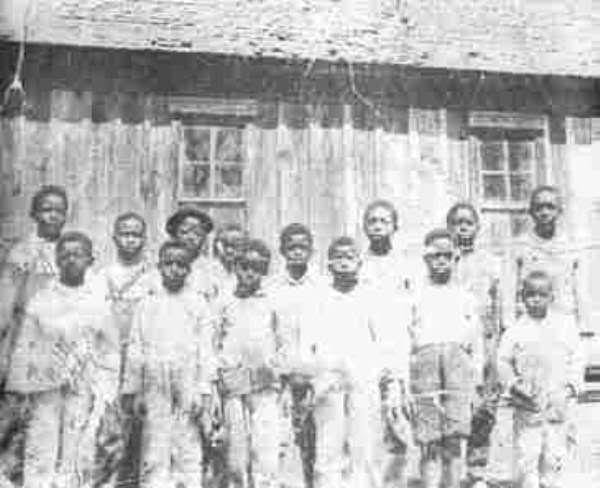
Mt. Tabor Baptist Church — Two Mile Community, near Gause, Milam County. The building still stands. The congregation that raised it is still the reason it stands. The Two Mile/Mt. Tabor community near Gause embodied freedom colony characteristics: a post-emancipation Black settlement with land ownership, a central school and church (Mt. Tabor Baptist as anchor), mutual aid networks, and resilience under segregation.
These four churches were not separate institutions. They were a network — sharing ministers, sharing families, sharing the weight of building a free life in a county that had not yet decided whether to let them. The Burtons, the Smiths, the Malones — they moved between these pews. They buried their dead in the same ground. They taught their children in the same buildings. They were, in every sense that matters, one community.
"The church was not where they went on Sunday. It was where they lived."