
Our Mission
To walk amongst those who have received the ancestral call to —Know Thyself.
Every researcher and volunteer at the Legacy Preservation Project has walked this road personally. We do not educate from a distance — we share from our own personal experience. Our families were misclassified, erased, and buried in the same records we now excavate for yours. Our success in recovering those lineages is the proof of concept. We are not guides who read the map. We are the ones who drew it — because we had to find our own way home first. You can do this.
Research archive
The work lives in the record.
Family documents and historical records are approached with care, context, and a commitment to distinguish evidence from interpretation.

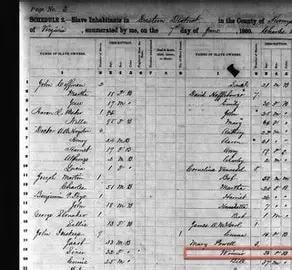
Why We Exist
To reconnect 2.5 Million — Indigenous People of Color, Erased from North America's Record and expose the long hidden history of the Paper Genocide
Before the land theft, the paper genocide, and the colonization of North America, South America, Central America, the Caribbean Islands, and the West Indies — it is fully documented that red, yellow, brown, and even extremely dark people have always existed in the Americas. America was not an empty country prior to colonization. You know the Mongoloids. The ancient brown, red, and yellow humans who still exist amongst us to this day. They are as legitimate as Negroid and Caucasoid of the world. The American Aboriginal & Indigenous people, (Mongoloids), populated two entire continents long before any European ships crossed the Atlantic Ocean.
For generations, families across the Americas — particularly in the American South — were stripped of their Indigenous, native identity through deliberate government misclassification. Birth certificates, census records, and tribal rolls were systematically altered, erasing Native ancestry in the old empire of Meso America and replacing it with labels like ‘Negro,’ ‘Mulatto,’ or ‘Free Colored.’ Ultimately many identify as BLACK or African Americans. We acknowledge life originated out of Africa but the erasure was not clerical error. It was policy.
Inclusive by Design
The Ancestry & People We Serve
Indigenous & Native American Families
Aboriginal, Indigenous, Native Families in America. Families with documented or oral-history connections to Indigenous nations who were misclassified in colonial and federal records.
African American Families
Descendants of enslaved and free people of color whose Native ancestry was deliberately obscured through racial reclassification, erasure mis documentation.
Mestizo & Mixed-Heritage Families
Families of mixed Indigenous, African, and European descent navigating complex identity questions rooted in historical erasure.
Researchers, Genealogists & Theologians
Scholars, genealogists, theologians, and community historians working to document and restore erased lineages for future generations.
Historical Context
How Ethnogenesis Erased a People & Makes New People
Ethnogenesis — the formation of a new ethnic identity — was weaponized against Indigenous and mixed-heritage communities throughout the 18th and 19th centuries. State officials like Virginia's Walter Plecker systematically reclassified entire communities, removing their Native identity from the official record and replacing it with designations that stripped them of rights, land, and belonging.
"They did not disappear. They were made invisible."
What Guides Us
Our Values
Truth Over Comfort
We follow the historical record wherever it leads — even when it is painful, complicated, or inconvenient for existing narratives.
Dignity in Every Case
Every family we work with deserves to be treated with care, respect, and the full weight of scholarly attention despite skin color.
Education as Liberation
Understanding what happened — and why — is the first step toward reclaiming identity. We make that education freely available.
Family-Run, Mission-Driven
This project is founded and operated as a family mission — rooted in kinship, not commerce. We are descendants doing the work our ancestors deserved.
This Work Is Possible Because of You
The Legacy Preservation Project is a nonprofit organization operating under RECIPE INC, a registered 501(c)(3). We do not charge families for our educational resources. We serve a select number of families at a time — giving each case the depth and attention it deserves.
Your donation keeps this mission alive — funding research, documentation support, and access for families who have waited generations for answers.
DonateYou will be directed to recipe4parenting.com to complete your donation.
Donations to RECIPE INC are tax-deductible to the extent permitted by law.
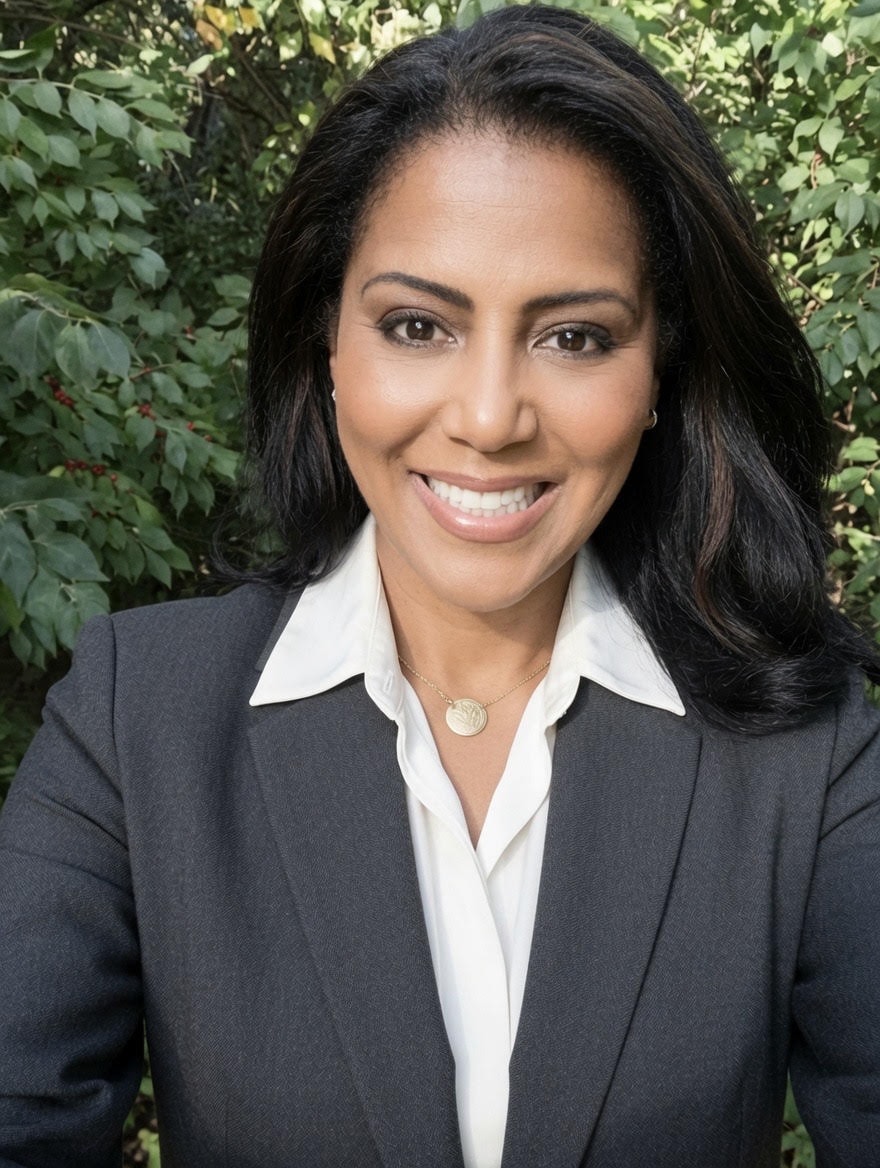
Cyndal Malone Provenzano, PsyTh.D.
Background & Lineage
- ◆B.A. Communications — Clark Atlanta University
- ◆B.A. Spanish — University of Costa Rica
- ◆M.A. — University of Sedona
- ◆Ph.D. Candidate — Theocentric Psychology
- ◆Ordained Minister — IMM
Cyndal Malone Provenzano, PsyTh.D.
Founder, Legacy Preservation Project
Cyndal Malone Provenzano is a researcher, author, ordained minister, and entrepreneur whose life's work sits at the intersection of ancestry, identity, and truth. She is the 5th great-niece of the 22nd Governor of North Carolina, Governor Hutchins Gordon Burton (1824–1827), 1st cousin, twice removed of Walter Moses Burton — the first Black sheriff elected in Texas and two term Texas State Senator during Reconstruction 1869— and a direct descendant of her 3rd great-grandfather Cyrus Burton of Two Mile Bottom, Milam County. The Burton Smith Network founded the Freedom Colony at Cox's & Two Mile Bottom & possibly Smith Bottom in Milam County. The Historic school for Colored & Negro Children was later stewarded by her late uncle Professor Doyle Shelton Smith in Gause. On the Malone side, she descends from Mario Malone (1803), of Ervipiame and Tonkawa heritage. These are not distant historical figures. They are her people.
Her Malone line descends from Mario Malone — known in oral history as Ol' Man Malone — a Tonkawa man who was baptized in 1803 at the Presidio in Nacogdoches to secure his land grant from the Viesca Municipality. He converted to Christianity & inherited the safe sur name. We cannot say he read what was coming before it arrived, but we know he documented a new identity to protect what was his. The Malones are a proud Mestizo family — her grandfather Mexican, her grandmother Tonkawa Mulatto (was very melanated)— The Malone's stayed together, stayed on the land they were born too, and were erased precisely because they did. In her early years, Cyndal spent summertime between Dallas, Gause Texas, and Mexico, on her family's land. The same land surrounding Sugarloaf Mountain and along the Little River, in the territory her great-uncles roamed freely until dusk. She was separated from that world by age 7. She spent the rest of her years, finding her way back — and building a road for others to follow.
A former flight attendant for ten years, she traveled the world studying human origins and world religions before turning that lens on her own bloodline. She holds a Bachelor of Arts in Communications from Clark Atlanta University, a Bachelor of Arts in Spanish from the University of Costa Rica, and a Master's degree in Metaphysical Science, from the University of Sedona. She is a Ph.D. candidate in Theocentric Psychology and an ordained minister through the IMM. She is currently completing Braided Bloodlines: The Ethnogenesis of the Malones, Burtons, and Smiths of East Central Texas — pre-sale December 2026.
Braided Bloodlines
The Ethnogenesis of the Malones, Burtons, and Smiths of East Central Texas
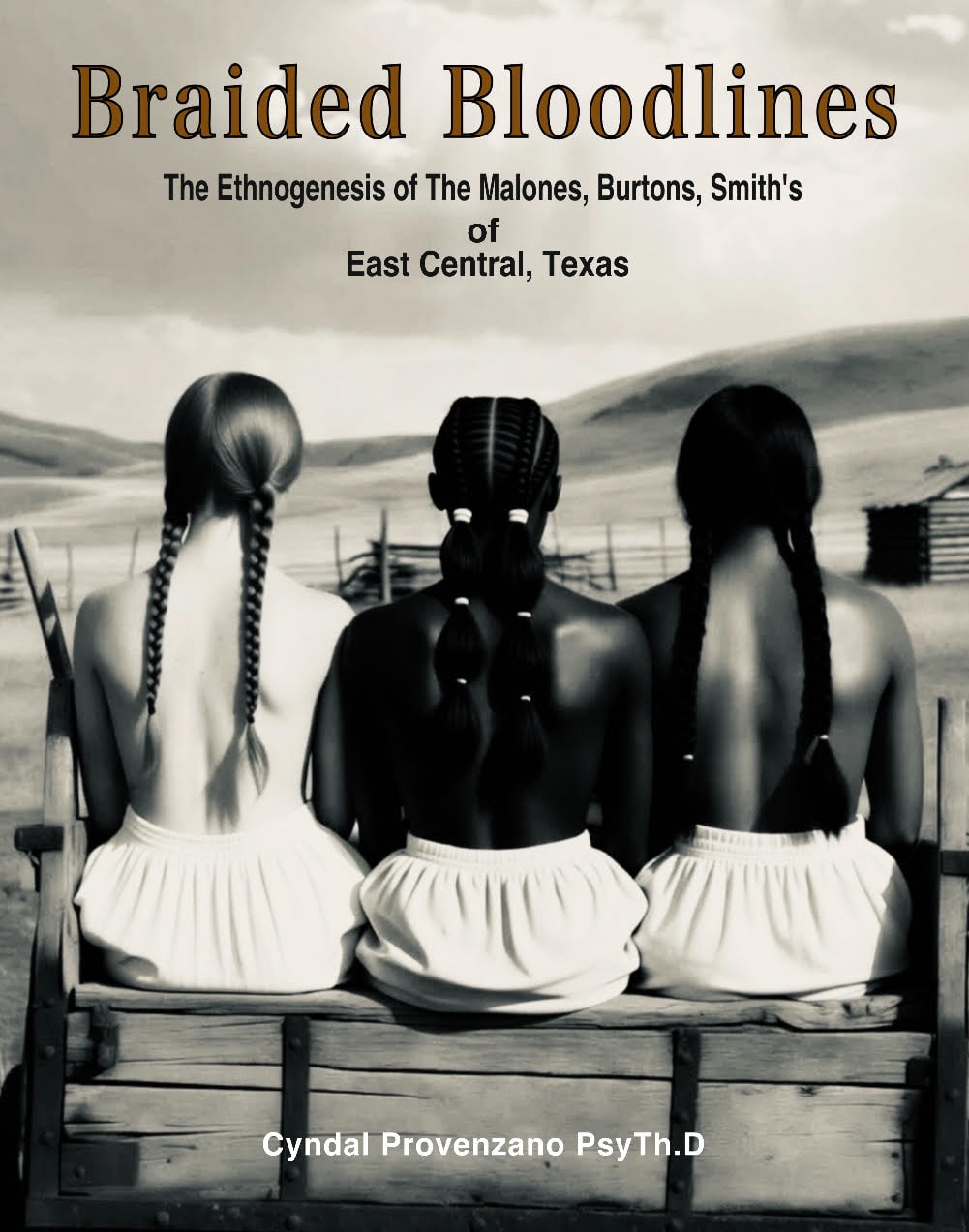
A landmark work of genealogical scholarship tracing three intertwined Texas families across five centuries — from the Tonkawa territory of Central Texas to the Freedom Colonies of Milam County, from the courts of North Carolina's 22nd Governor to the bottomlands of Two Mile Bottom. This is the book that puts the record straight.
Be the First to Know
Enter your email and we will notify you the moment pre-sale opens in December 2026.
The Scholarly Foundation of Reclamation
Heritage reclamation is not genealogy alone. It draws on historical demography, ethnohistory, documentary linguistics, and legal history to reconstruct what administrative records deliberately obscured. The Legacy Preservation Project applies this multi-disciplinary methodology to each case — treating every family's history as the serious scholarly subject it is.
The process begins with what you know and works systematically backward through census records, Dawes Rolls, Freedmen's Bureau records, Spanish colonial archives, church registers, land grants, and oral history — cross-referencing sources to build an evidentiary chain that can withstand scrutiny.
Oral History Contributors
The Voices Behind the Record
This research did not begin in an archive. It began at kitchen tables, over telephone calls, and holiday trips. These voices originated in the careful memories of family members who held the truth long before any document confirmed it. The following contributors shared their knowledge, their photographs, their family stories, and their trust. Their oral testimony is primary source material — as authoritative as any census record or deed.
Lorene Smith Burton
Grandmother of lead researcher · Burton–Smith line
Primary oral source for the Burton family migration from North Carolina to Texas, the Freedom Colony at Cox's, and the Burton house culture. Her testimony established the connection between the Smith and Burton lines and confirmed the Burton land legacy at Two Mile Bottom.
Milam County, TX
Rev. Aaron Burton
Burton family · Church and community line
Oral source for the Burton family's spiritual legacy, church community, and the religious traditions carried from North Carolina into the Freedom Colony. Rev. Burton's testimony preserved the intersection of faith and family identity across generations. It was Aarons relationship with Dummas who confirmed the Malone Tonkawa history and heritage and the existence of Pleasant Burton.
Milam County, TX
PJ Lemuel
Community oral historian · East Central Texas
Oral contributor whose knowledge of the A.M.E community, land history, and family networks provided critical context for the Burton research. Her testimony bridged community memory with the documentary record.
Atlanta, Georgia
Dr. Dumas Malone
Malone family · Scholarly and oral tradition
Oral contributor and family scholar whose knowledge of the Malone lineage, family history, and the broader historical context of the Malone name in American records provided essential grounding for the Malone and Burton line research.
Charlottesville, Virgina
First Lady Deloris Burton
Burton family · Community and family legacy
Oral contributor whose testimony preserved the Burton family's community standing, social history, and the lived experience of the Burton legacy into the modern era. Her knowledge of family relationships and community ties was invaluable to the research.
Dallas, Texas
Family Members — Names Withheld by Request
Extended Burton, Smith, and Malone family network
Multiple family members contributed photographs, documents, and oral testimony under conditions of privacy. Their contributions are documented in the LPP research archive and attributed in full in the forthcoming book Braided Bloodlines.
Texas · Indiana · North Carolina
★ LPP Note — Oral history is not anecdote. In communities where official records were deliberately incomplete, falsified, or destroyed, the living memory of family elders is often the only surviving record. LPP treats oral testimony with the same evidentiary weight as documentary sources.
Ready to Begin Your Journey?
If your family has been waiting for answers, we are here to help. Learn about our tribal screening process and take the first step toward reclaiming your heritage.
Learn About Tribal Screening