
...When the Heritage is Right...but the Records are Wrong!
Education & Heritage Reclamation
We Find What History is Still Hiding — One Legacy at a Time
a nonprofit program & division of RECIPE INC, a 501(c)(3)
The Genesis of Our Gift
Rooted solely in "Whole Family" Education and Truth
The Legacy Preservation Project is not a genealogy database chasing who begot whom. The genesis of our gift is far more broad — it honors every family tree in the whole forest. From deep beneath the roots to the smallest seasonal leaf, we account for all of the missing time in between. The Legacy Preservation Project is a living, working instrument built for families whose histories were deliberately buried beneath colonial classification systems. We recover names that were erased. We reclaim origins that were stolen. We restore the legacy that was always rightfully yours — through a unique and freely accessible education that begins right here.
Grounded in four core commitments, everything we do serves one purpose:
Building the scholarly foundation families need to understand how their heritage was obscured — and how to recover it.
Advocating for the legal and cultural rights of Indigenous, triracial, and mixed-heritage communities to know and claim their ancestry.
Replacing the administrative fictions of colonial record-keeping with documented, evidence-based ancestral identity and theocentric truths.
Equipping families with the language, research skills, and historical context to read their own records — and their own story.
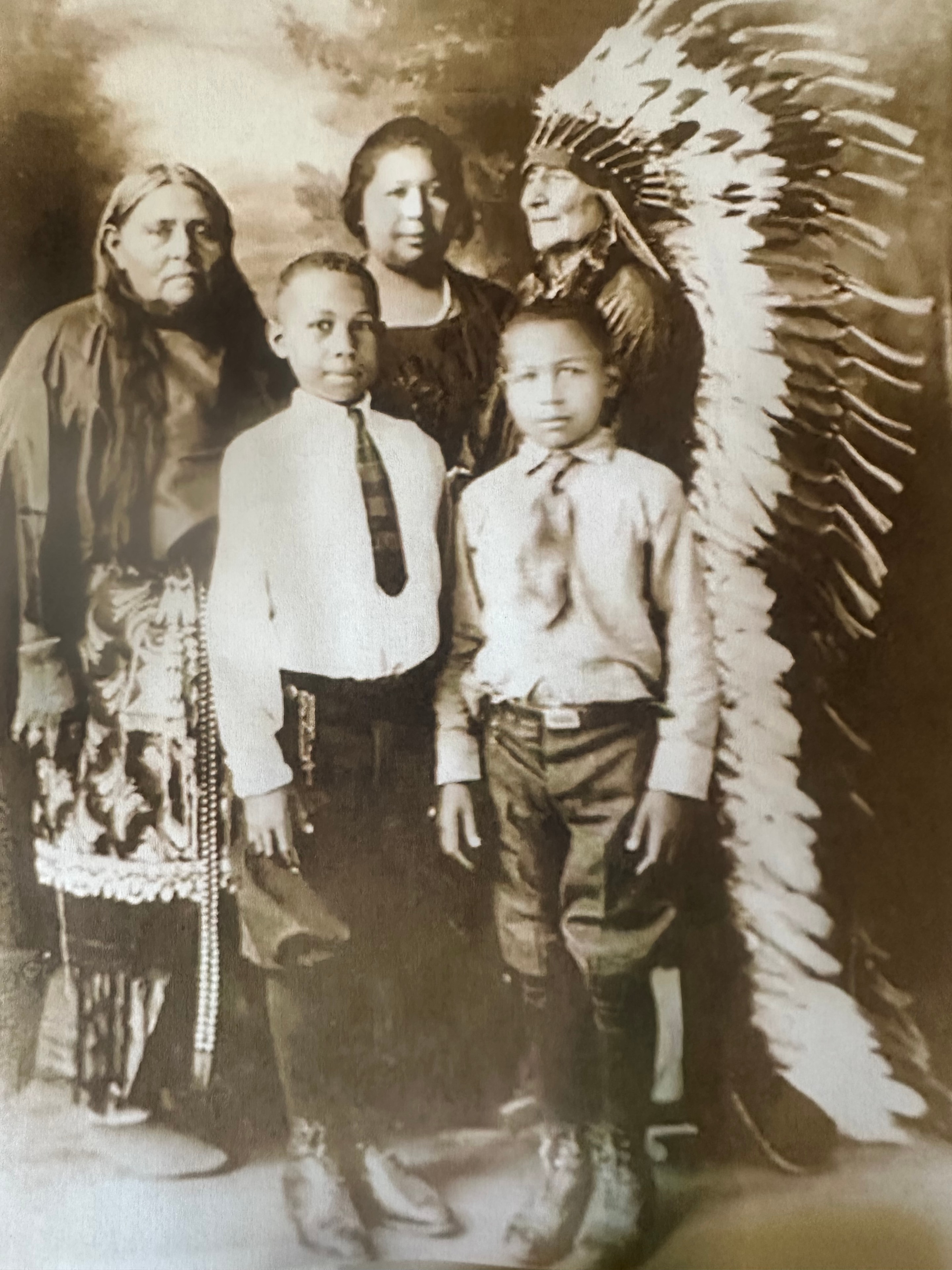
The Tribal Screening Program
Descendant from Africa Or Native to America
Before colonization, the vast population of people living in north, central and south America were melanated people. They were brown, they were copper, tawny and swarthy. To assume the ancestry of these people did not exist prior to colonization is a complete failure of education. See Heritage
The Legacy Preservation Project specializes in helping individuals and families navigate the complex history of colonial erasure — from Indigenous tribal misclassification to the displacement of Free People of Color and Mestizo communities. Through our Tribal Screening Program, we guide you through the documentation, research, and reconnection process with compassion and expertise to reclaim your heritage, rebuild your legacy and live sovereign.
Photo Courtesy of © The Smithsonian Institute 2026
Tri-racial American Mestizo Family — a portrait documenting the convergence of Indigenous, European, and African ancestry in early American communities.
Our Services
How We Help Families Preserve Legacy
Our Core Offering
In-Depth Genealogical Research — The Work Other Sites Won't Do & Independant Genealogist charge a small fortune to attain.
At the heart of everything we do is research. Not surface-level database searches — but the deep, document-by-document, record-by-record work that reunites families with their true lineage and sovereignty. Our team of three dedicated researchers — including our founder — specializes in the kind of DNA and database investigation that other genealogy platforms charge double for, claim to offer but don't, or simply don't have access to yet.
We know how to navigate the archives that were designed to keep your family hidden. Spanish colonial records, Freedmen's Bureau files, Republic of Texas land grants, tribal enrollment documents, church registers, and oral history cross-referenced against hard evidence. We help families research their lineage, establish their heritage, and understand their sovereignty — one family at a time.
Oral History & Storytelling
Professional interviews capturing elders' stories, traditions, and family histories — preserved as transcripts, audio, or video.
Legacy Books & Memoirs
Heirloom-quality books compiling your family's history, photographs, documents, and stories for future generations.
Genealogy Research
Deep ancestral research across Indigenous records, Freedmen's Bureau archives, Latin American civil registries, and more.
Digitization & Archiving
Scanning, restoring, and securely archiving old photographs, letters, documents, and home movies.
Heritage Analysis — DNA Casino Warnings & Dawes Roll Widespread Miseducation
Guidance on DNA testing and admixture analysis, with sensitivity to multicultural and mixed-heritage backgrounds.
Tribal Screening Program
Our signature program helping families document Indigenous ancestry and reconnect with the nations they descend from.
This is more than paperwork
Your heritage is not lost.
Some things were hidden on purpose.
We help you find them — at no cost.
Annual Family Selection
Become That Chosen Family
Each year, the Legacy Preservation Project selects four families for dedicated heritage research, documentation, and reconnection support. Participation has no charge, but it requires time, dedication, active participation, and agreement to the program terms. As a reminder, this site also offers a complete DIY blueprint, via education & using family legacy as example.
Enrollment deadline
February 28, 2027
Selected families announced
March 21, 2027
By applying, you agree to the program Terms & Conditions.
Who We Serve
We serve ANYONE who seeks to find erased heritage, connect bloodlines & heal from generational trauma.
Every researcher and volunteer at the Legacy Preservation Project has walked this road personally. We do not teach from a distance — we share from experience. Our own families were misclassified, erased, and buried in the same records we now excavate for yours. Our success in recovering those lineages is the proof of concept. We are not guides who read the map. We are the ones who drew it — because we had to find our own way home first.
Colonial systems deliberately obscured the identities of millions of families across the Americas. Whether your ancestors were classified as Kin-Slaves, Indigenous peoples misclassified under racial categories, Free People of Color displaced and erased from institutional records, or Mestizo families with complex multicultural roots — your story matters and your heritage can be reclaimed.
Many families were historically labeled under classifications such as:
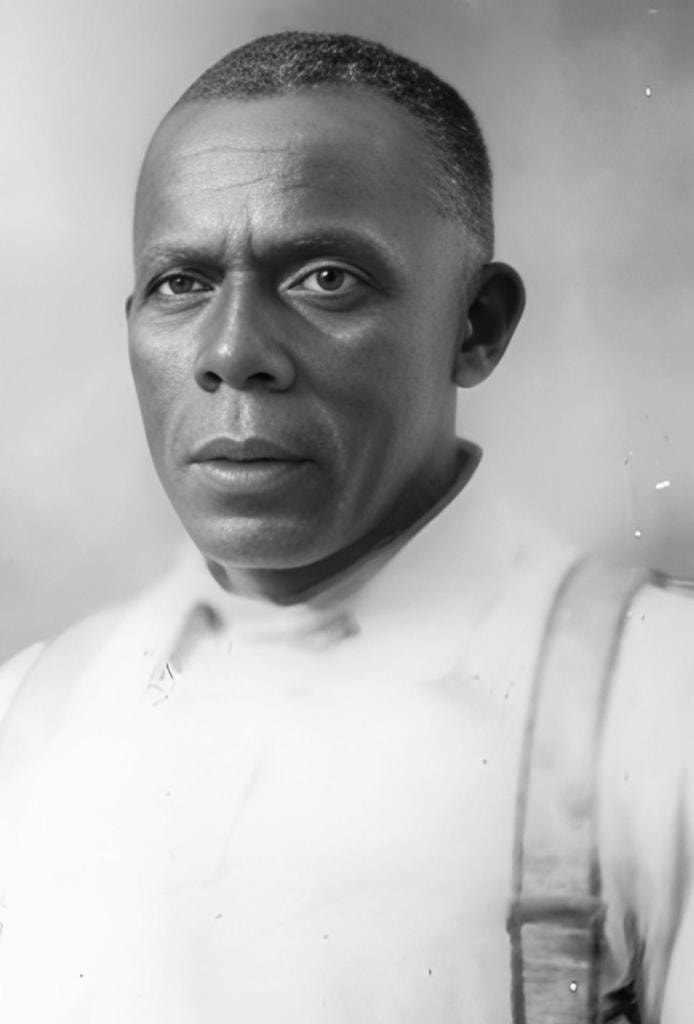
Hilliard Rhiley Malone Sr. 1875–1970
Original Photography · Son
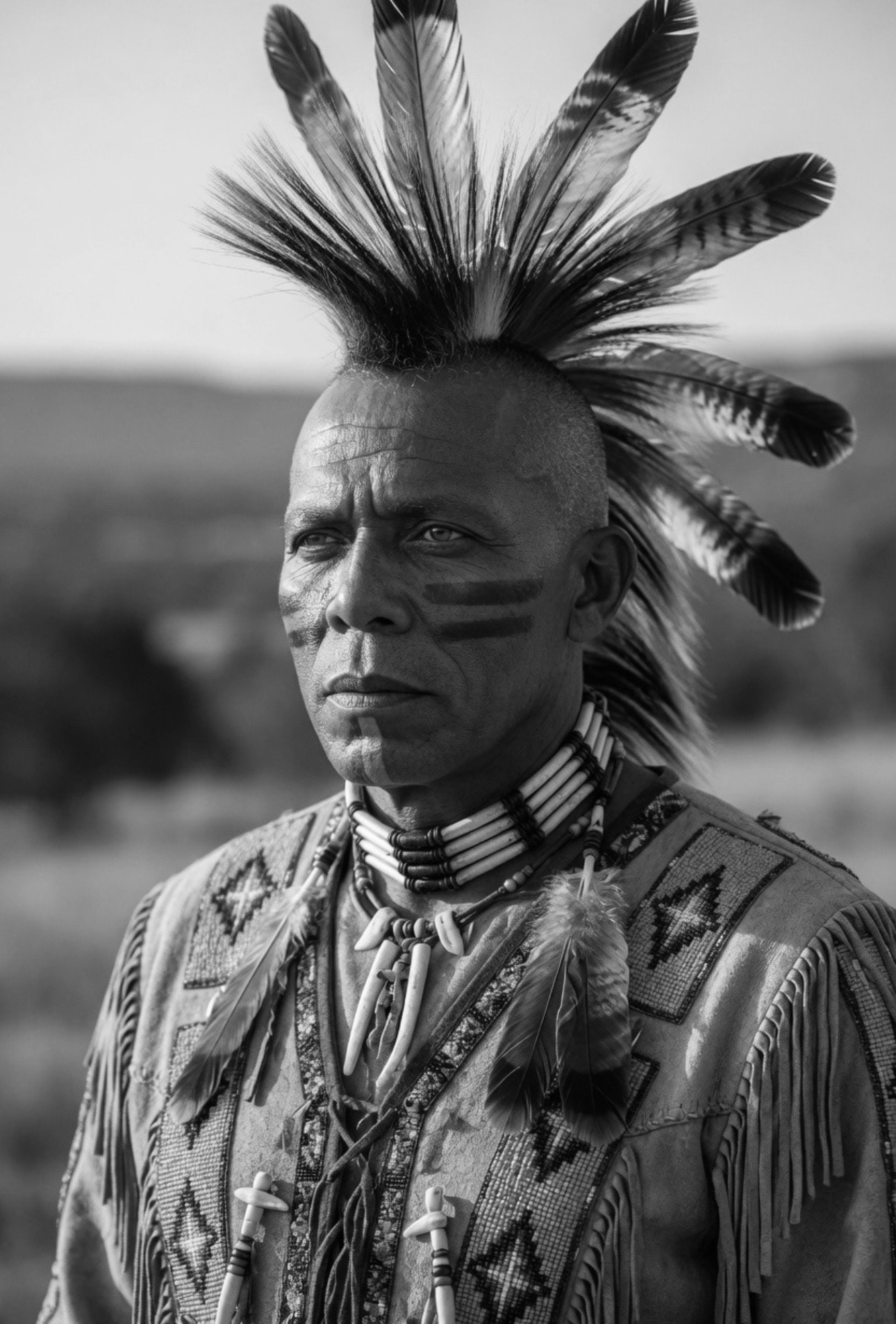
Jim James Malone
Father · AI Rendering
listed "Mulatto," 1860 census
Hilliard Rhiley Malone Sr. (1875–1970) — Gause, Milam County, Texas. His father, Jim James Malone (b. 1856), appears in the 1860 census listed as "Mulatto" — a colonial classification that erased Indigenous identity with a single word.
The erasure was total. Culture, language, ceremony — suppressed. The right to marry freely, to gather, to name themselves — stripped away. Families were forced to hide, to blend in freedom colonis or face displacement onto reservations. So they did what survivors do: they went quiet. They didn't talk about it.
When asked about the family name, Hilliard was clear: "We inherited the name Malone." Not assigned by the Freedmen's Bureau. Not given by a guardian. Inherited by God — by way of old man Malone's Catholic baptism in Nacogdoches, administered by a Catholic Friar. The Malone family never told one story about slavery — because that was never their story to tell. Per Dumas Malone, Harvard historian, and a small circle of volunteer researchers and family members with deep expertise tracing family lines, kin-slave relationships, and migration patterns — from Virginia, Tennessee, through the Carolinas and Georgia into Louisiana and East Texas, the primary corridor for FPOC, Mustee, and triracial families in the antebellum period — the Malones are an anomaly. The reason their arrival to America could not be traced is because they never left. The Malones are Tonkawa Indian.
"The records were WRONG...BUT... the heritage was RIGHT!!"
Your Heritage Is Waiting
Take the first step toward reconnecting with your ancestral nations. Our team is ready to guide you through every stage of the journey.
Start the Screening ProcessSupport This Work
Your donation funds research, documentation support, and access for families who have waited generations for answers.
DonateYou will be directed to recipe4parenting.com to complete your donation.
The Legacy Preservation Project is a nonprofit program & division of RECIPE INC, a 501(c)(3) family-owned organization exempt from federal income tax under the Internal Revenue Code. Contributions are tax-deductible to the extent permitted by law.