
Family Legacy
The Burton Legacy
A rich, deep & painful story — Anglo and Mulatto — of Kinship and Courage, from Shropshire England to the Texas Freedom Colonies
This page is part of a living research archive. LPproject.org is actively used by researchers and educators as a teaching tool and as living proof of documented Indigenous, Mulatto, and Anglo heritage. We hold ourselves to the truth as closely as the record allows — and when the record corrects us, we correct the page. Dates, relationships, and interpretations on this page may be updated as new evidence emerges. That is not a weakness. That is the work.
The Untold Mulatto Burton History
What Google Did Not Archive
Wiki. Ancestry. Google. They all tell the Anglo Burton side of the story. This page tells the Mulatto side of a story kept hidden. As heartbreaking as it is to document here, there was LOVE, to be found in blood.
Search the Burton name online and you will find Colonel Robert Burton, Governor Hutchins Gordon Burton, and Thomas Burke Burton. You will find Longnor Hall in Shropshire. You will find the plantation at Beattie's Ford and mentions of The Burton House. You will find the Texas state senators, Superior Court Judges and former Governors. What you will not find — not easily, not without digging — are the names Cyrus, Dover, Ned, Pleasant, and Walter Moses (ALL BURTONS). You will not find Aaron or Nathaniel Aaron. You will not find Lucy, Lorene or Nancy. The institutions that approve what counts as history made a choice. This page makes a different one. This is what The Legacy Preservation does. We recover lost history & preserve legacy.
The melanated Burtons share a surname because they are blood-kin — Likely born outside the Burton house or close by, but educated inside the Burton house, named in Burton wills, given & purchased Burton land and carried west in the same migration. Many BORN FREE, classified as Mulatto by a legal system that needed a category for people it could not otherwise contain. Also classified SLAVE KIN when necessary. That classification was not their identity. It was a cage built around it.
Dumas Malone — the Pulitzer Prize-winning renown historian who spent his career documenting Thomas Jefferson — was a close friend of this researcher's great-uncle (Rev Nathaiel Aaron Burton). He was a traditionalist fascinated by freedom colonies. He understood that the most important American history was the history the official record refused to hold. The melanated Burton line is exactly that kind of history. It exists in census records, in wills, in land deeds, in the names people gave their children and oral records. It exists in FAMILY.
The institutions who approve history do not want us to know there were Anglo or white settlers who loved their family, despite color. However, these same blood kin & system were not without fault. The same records used to hide the truth, also reveal the truth. The Great American Experiment has come to the light.
Yes — this family, collectively, held enslaved people. That is true. That truth belongs in this archive alongside every other truth. It is not the fault of the triracial family today. However, it is an inheritance to reckon with honestly. This is the painful part of the story that is not about white or black...light skin dark skin... This story is about the human lives' of a specific family. This is a story which encompasses both good and evil, as well as love and hate. What we can say — and what the record supports — is that the melanated Burtons were not treated as strangers. They were educated. They were named in wills. They were sold land after emancipation by the same Anglo cousins who migrated with them. That is not the story of a family that wanted to erase its colored kin. That is the story of a family that could not say out loud what it already knew.
Direct Line of Researcher (For educational purposes ONly)
Count the line from John Burton — 6th great-grandfather — forward: John → Alfred Moore → Dover → Cyrus → Aaron → Lorene → Ester → to Mother (2026). Eight generations. Documented. Unbroken. Untold — until now.
The Anglo & Mulatto Burton Lines — England to Texas
A Legacy of Land, Literacy and Law
The Burton story is not necessarily a tale of division — it is a testament to how family and kinship refused to bow to the newly formed racist systems built to separate them. However, it is a heritage that begins in England before the great migration, the great American experiment and colonization.
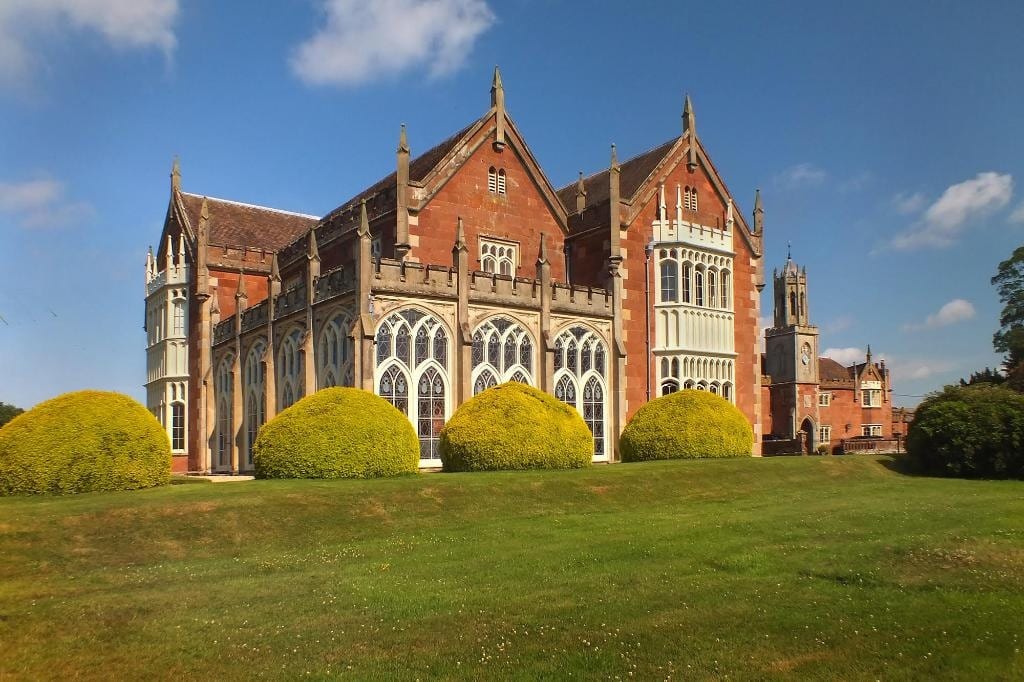
The Longnor Hall Burton family lineage in Shropshire, England traces its earliest documented roots to 1346. In the 14th and 15th centuries, members of the family regularly represented Shrewsbury in Parliament and established themselves as prominent local landowners. The earliest recorded members of the Longnor Hall Burton lineage arrived in America in 1634, with a broader family presence firmly established by 1656. For perspective, the Burtons made it to America 27 years after King James established the first colonizers at Jamestown. Their Virginia migration, North Carolina travels — through the plantations of Beattie's Ford — crossed into Texas. That journey continues today through descendants who carry Anglo, African, and Indigenous heritage with self-pride.
It is unfortunate that we may never know if the melanated line was conceived with or without consent. We also do not know whether the women who carried the mulatto lines were of African or Indigenous descent — as all three racial stocks underwent rapid reclassification. Anglo indentured servants served approximately seven years of servitude. Indigenous peoples faced up to twelve years of forced slavery. Africans were enslaved for life — until emancipation. It is a very sensitive topic. However, we do know WE ARE HERE— therefore, WE EXIST.
Chapter I · The Anglo Burton Line — Shropshire to North Carolina
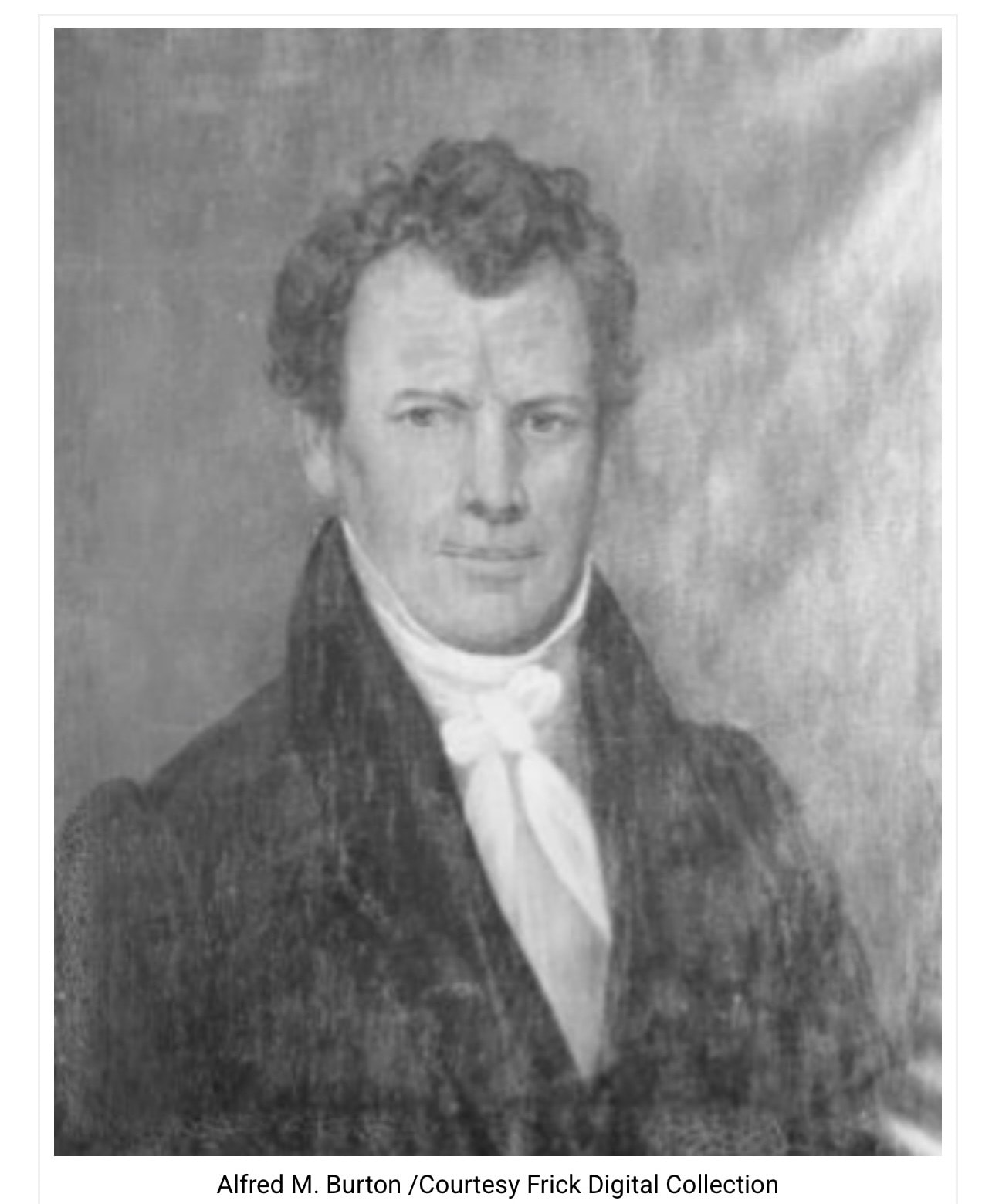
Alfred Moore Burton
b. 1785 · d. 1850s Born in NC. Planter:
Beattie's Ford Plantation, Lincoln County, NC
England · Virginia · North Carolina · Texas
The Anglo Burton Line — started with The Shropshire Burtons. Alfred Moore Burton ... Never made it to Texas. However, his sons, nephews & family both Anglo and Mulatto did between 1850 -1860
The Burton-Malones of East Central Texas, from Fort Bend to Milam County (Gause~Cox's ~Two Mile) Freedom Colony, are direct descendants of the Longnor Hall, Shropshire, BURTONs — Scots-Irish Clan of England.
For the record, the Burton line did not begin in North Carolina. It began in Shropshire, England — at Longnor Hall, a Grade I listed country house in Atcham, Shropshire and the ancestral seat of the Burton family. This line is one of three Burton yeoman Scots-Irish families. This one is from Shropshire. The distinction matters: our branch was what family memory calls the 'landed' Burtons — not the most publicly prominent of the three lines, but the wealthiest and most influential line in terms of property and holdings. They were, as our great-aunt described them, 'landed' rather than titled — a meaningful difference in English social hierarchy. The family is documented in Burke's Peerage, the authoritative record of British landed gentry and aristocracy.
From Shropshire, the Burtons made the transatlantic crossing — England to Virginia — as part of the broader Scots-Irish migration that populated the colonial backcountry. From Virginia they moved south and west into North Carolina, where they established themselves in Granville and Lincoln Counties. It was here that the family's united front and American chapter truly began.
In North Carolina, the Burtons acquired Beattie's Ford — purchasing the land from John Beattie. The Ford sat at a critical crossroads on the Beatty's Ford Road, a major artery connecting Salisbury (then the largest town in the region) to the western settlements. Using the 1808 Price & Strother Map of North Carolina, Beattie's Ford is clearly shown at this important junction. The road extended east past the Torrance plantation along what is now Gilead Road in Huntersville toward Salisbury, and west through the Graham family lands. The name Beatty's Ford Road survives to this day in Rowan County.
Both Alfred M. and brother, Robert Burton married daughters (two sisters) of John Fullenwider — the influential Fullenwider ironmaster family. The sons-in-law purchased land and improved the plantations together. Alfred was still purchasing land from John Fullenwider as late as 1814. Robert built his house to the south of his brother's, believed to have been of similar construction. According to the 1830 Census and statistics from the Gilder Institute of American History, Alfred Burton owned approximately 44 enslaved people and his brother Robert approximately 60 — placing the Burtons among the top one percent of slave owners in the American South. The Burtons owned 3,000 acres there. Their plantation was a large and profitable enterprise by any measure of its day.
★ LPP Note
The Burton family's American roots trace to Granville and Lincoln Counties, North Carolina, where the Anglo Burton line established itself as planters, lawyers, and public officials. The Burtons operated plantations at Beattie's Ford known as "The Burton House" — now submerged beneath Lake Norman — where both Anglo and mixed-race Burton lines lived within the same extended household. What you will not find in the public record: Dover and Walter were cousins. Just as Thomas and Pleasant were cousins. History will not tell us they were all family. Two Anglo, two Mulatto. The Burton house did not recognize the law's distinctions — every blood relative was educated in the Burton Family.
Source: Lake Norman Publications
Colonel Robert Burton ~ (1747–1825) · Revolutionary War Hero · Uncle and Adoptive Father of Gov. Hutchins Gordon Burton · Grandfather of Alfred M. Burton (through his son John Burton)
Agatha Keeling/Williams Burton · Mother of Alfred M. Burton · Source of the Williams surname alias Used by Pleasant and Moses Burton (not to be mistaken with Walter Moses but simply "Moses", son of Cyrus Burton). Both aliases used for Lucy Williams/Burton.
Alfred Moore Burton (1785–1850s) · 5th Great-Grandfather of LPproject.org founder· Alfred never made the migration, but he coordinated it. He fell ill and remained at Beattie's Ford Plantation, NC · Alfred was also Father of Dover Burton (mulatto)· Grandfather of Cyrus Burton (listed as chattel slaves for migration safe travel-purposes). On his death bed it is recorded he personally gave his grandson, Cyrus Burton (son of Dover jr) to his daughter (Cyrus's aunt Sarah Burton), before migration. Cyrus was born a (FPOC) free person of color but was listed as chattel slave for safe passage.
Robert Burton · Alfred's Brother · Born: 22 July 1781, Granville County, North Carolina Died: 26 February 1842, Lincoln County, North Carolina: Father of Pleasant Burton (Mulatto) Pleasant Burton was also the uncle of Thomas Burke Burton and cousin to Dover Burton (Mulatto).
Gov. Hutchins Gordon Burton · 22nd Governor of NC · Nephew of Colonel Robert Burton · Father of Thomas Burke Burton. Governor Hutchins Gordon Burton (NC Governor, 1824–1827) was raised inside our Burton household. Family oral history teaches that he was adopted by Colonel Robert Burton (founders, 6th great‑grandfather), and later cared for by Alfred M. Burton (5th great‑grandfather). In the Burton family he was known as “Cousin Hutch.” His nephew, Thomas Burke Burton, later brought mixed Burton kin — Walter Moses Burton, Pleasant Burton, Dover Burton, and Cyrus Burton — from North Carolina to Texas. Hutchins’ adoption explains why the Burton line is both Anglo and Mulatto, and why institutions erased Ned, Pleasant, Dover, Cyrus, and Walter from the official Burton genealogy. Inside the Burton house, they were family. Outside the Burton house, they were reclassified, erased and listed as slaves.
Thomas Burke Burton (1831–1861) · Anglo · Son of Gov. Hutchins Gordon Burton · It is recorded that Thomas Burke Burton Led the migration from Lincoln, NC to Fort Bend, Texas. However, it was his Mulatto uncle Pleasant Burton who led his free Anglo nephew Thomas, not uncommon for antebellum migrations. They arrived between late 1850-1860 along with Walter,
Ned Burton (b. 1802) · Mulatto · Father of Walter Moses Burton · Uncle to Thomas Burke Burton
Fullenwider daughters married Burton brothers · Ironmaster family of Lincoln County, NC
Chapter II · The Corrected Migration Record — Two Cousin Groups
The Corrected Migration Record
Two Cousin Groups — One Family Migration
Fort Bend County, Texas · 1850–1860
The Burton migration into Texas was not a single line moving west. It was two cousin groups — one Anglo, one Mulatto — traveling together or in parallel, bound by kinship, literacy, and the culture of the Burton house. Alfred Moore Burton himself did NOT make this trip. He remained at Beattie's Ford, Lincoln County, North Carolina. His branch stayed in North Carolina. The migration was led by his nephew Thomas Burke Burton.
✦ Correction — Updated Record 9.12.26
The Anglo Burton Cousins
Thomas Burke Burton (There were two... Thomas Burk Burtons) in the Burton household)
Son of Governor Hutchins Gordon Burton. Anglo. Youngest son of the Governor. Left NC and established a large plantation in Fort Bend County, Texas. Brought his mixed-race kin with him. The online history was that Thomas Burke Burton taught Walter Moses Burton to read and write. Truth: Walter knew how to read and write before leaving NC. After Emancipation, sold Walter large tracts of land — launching Walter into wealth and political power. Selling land to mulatto kin just keeps the land in the family.
The Mulatto Burton Cousins
Walter Moses Burton
Son of Ned Burton (Mulatto). Traveled with Thomas Burke Burton. Taught to read and write by Thomas. Became the first Black sheriff elected in Texas and a state senator. The family believes he was born around 1829 — not 1840 as commonly cited. His name 'Moses' was a nickname earned for delivering his people through literacy, land, and tax knowledge.
Pleasant Burton
Son of Robert Burton (Alfred's brother). Mulatto. Alfred's nephew. Thomas Burke Burton's cousin. Walter's cousin by kinship network. Could move between Anglo and Negro worlds. Helped guide the migration from NC to Fort Bend, then to Cox's Two Mile (Milam County). Later migrated north to Indiana/Ohio — a free state — using aliases Fullenwider and Williams to survive.
Dover Burton
Mulatto son of Alfred Moore Burton. Born free. Reclassified for the migration as legal protection — not oppression. Known within the family as 'Judge Dove' — a community arbitrator, tax advisor, and guide for freedmen navigating early Texas life.
Cyrus Burton
Son of Dover. Born 1834 in NC as a Free Person of Color. Named in Alfred's will on his deathbed — legal protection for a grandson who was biologically part of the Burton line. Settled in Two Mile Bottom, Milam County. Held over 200 acres mortgage free. Named his firstborn son Moses — in tribute to Walter Moses Burton.
Chapter II-B · The Thomas Burke Burton Naming Tradition — Set Straight
A Name Repeated Across Generations — A Dynasty Confirmed
The Thomas Burke Burton Confusion — Set Straight
Governor Hutchins Gordon Burton · Governor Thomas Burke · The Burton Naming Tradition · Lincoln County, NC
If you have ever tried to trace a Thomas Burke Burton in this family and ended up confused — you are not alone. Every serious researcher who has touched this line has hit the same wall. The name Thomas Burke Burton appears more than once in this family, across more than one branch, and in more than one state. That is not an accident. That is a deliberate, documented Burton family tradition. The Burtons named their sons after the men they admired most — and they did it repeatedly, across brothers, across generations, and across bloodlines. Governor Thomas Burke (Revolutionary War Governor of North Carolina, 1781–1782) was one of those men. So was Governor Hutchins Gordon Burton (North Carolina Governor, 1824–1827) — who was raised inside the Burton household itself. When a family raises a governor, they name children after him. When they already honored the governor he was named for, they name children after him too. The result: multiple Thomas Burke Burtons, in multiple branches, and generations of researchers trying to untangle them.
What the Primary Records Actually Show
The one Thomas Burke Burton who appears clearly and repeatedly in primary genealogical records — Geni, FamilySearch, Find a Grave, and contemporary accounts — is the son of Governor Hutchins Gordon Burton and his wife Sarah Wales/Welsh Jones. This Thomas Burke Burton was born around 1831. His father, the Governor, was himself raised inside the Burton household at Beattie's Ford — the nephew and adopted son of Colonel Robert Burton. The name Thomas Burke was the Governor's own tribute to the Revolutionary War governor he was named after. When the Governor named his son Thomas Burke Burton, he was continuing a naming chain that ran straight through the Burton household.
★ DOCUMENTED: Thomas Burke Burton, born ~1831 — son of Governor Hutchins Gordon Burton and Sarah Wales/Welsh Jones. This is the Thomas Burke Burton confirmed in primary records. His father was raised by Colonel Robert Burton — the same household that produced Alfred M. Burton, Robert H. Burton, and Frank Nash Williams Burton.
What Family Oral History and Naming Patterns Tell Us
Family oral history — including the research notes of Deloris Burton and the oral tradition carried by this line — holds that the name Thomas Burke Burton also appeared among the sons of Robert H. Burton and possibly others in the broader Burton household network. This is entirely consistent with how the Burtons operated: when one brother honored a name, others followed. The same pattern produced multiple Alfreds, multiple Roberts, and multiple Franks across this family. No primary record has yet surfaced to confirm a Thomas Burke Burton as the documented son of Robert H. Burton or Frank Nash Williams Burton — but the absence of a record in this era, for this family, is not the same as absence of the person. Enslaved and free people of color who carried the Burton name used the same naming traditions. The name traveled with the family.
★ FAMILY TRADITION / UNCONFIRMED IN PRIMARY RECORDS: A Thomas Burke Burton connected to the Robert H. Burton branch and the Texas migration. Consistent with Burton naming patterns. Not yet located in surviving primary documents. Researchers: if you find him, this is where he belongs.
⭐ Why This Matters
Whether there was one Thomas Burke Burton or three, the naming pattern itself is the evidence. Here is what it tells us:
- ◆The Burton household raised Governor Hutchins Gordon Burton — one of their own became governor of North Carolina.
- ◆The Burtons honored Governor Thomas Burke (Revolutionary War, 1781–1782) through naming — across multiple brothers and generations.
- ◆The one confirmed Thomas Burke Burton in primary records is the Governor's own son — born ~1831, documented in Geni, FamilySearch, and Find a Grave.
- ◆Family oral history places a Thomas Burke Burton in the Robert H. Burton branch and the Texas migration — consistent with the naming pattern, not yet confirmed in primary records.
- ◆Frank Nash Williams Burton's documented children (primary records) do not include a Thomas Burke Burton — his line settled in Murfreesboro, Tennessee, not Lincoln County, NC.
- ◆The confusion is real, documented, and shared by every researcher who has touched this family — it is a feature of the Burton naming tradition, not a flaw in the research.
- ◆Both Anglo and Mulatto Burton lines used the same names — the name Thomas Burke traveled with the family across bloodlines, state lines, and generations.
The Simple Explanation for the Family
The short version: One Thomas Burke Burton is confirmed in primary records — the Governor's son, born ~1831. Family oral history and naming patterns strongly suggest the name appeared in other Burton branches as well, including the Texas migration line. The records for those individuals have not yet been located. That is an honest answer. This family deserves honest answers.
"The name was not an accident."
When a family names multiple sons after the same governor — across brothers, across bloodlines, across state lines — they are telling you exactly who they believed themselves to be. The Burtons knew. Now we know too.
Chapter III · Ned Burton — The Erased Mulatto Patriarch
The Erased Patriarch
Ned Burton — Mulatto · Father of Walter Moses Burton
Ned Burton was born in 1802. He was Mulatto — a fact confirmed by Deloris Burton's notes and consistent with the oral history carried forward by Nathaniel Aaron Burton. Ned belonged to the same generation as Governor Hutchins Gordon Burton. He was uncle to Thomas Burke Burton.
This relationship is the missing link that explains everything: why Thomas brought Walter to Texas, why the Anglo and Mulatto lines stayed intertwined, and why Walter Moses Burton had the literacy, land access, and political support to become sheriff and senator.
Racist genealogists refused — and still refuse — to connect Walter Moses Burton to Governor Hutchins Gordon Burton. Because if Ned was Mulatto, then Walter was also Mulatto and blood kin to the white Burton governors, colonels, and planters. That is what institutions did not want to admit.
Chapter IV · Walter Moses Burton — The "Moses" of the Burton Line
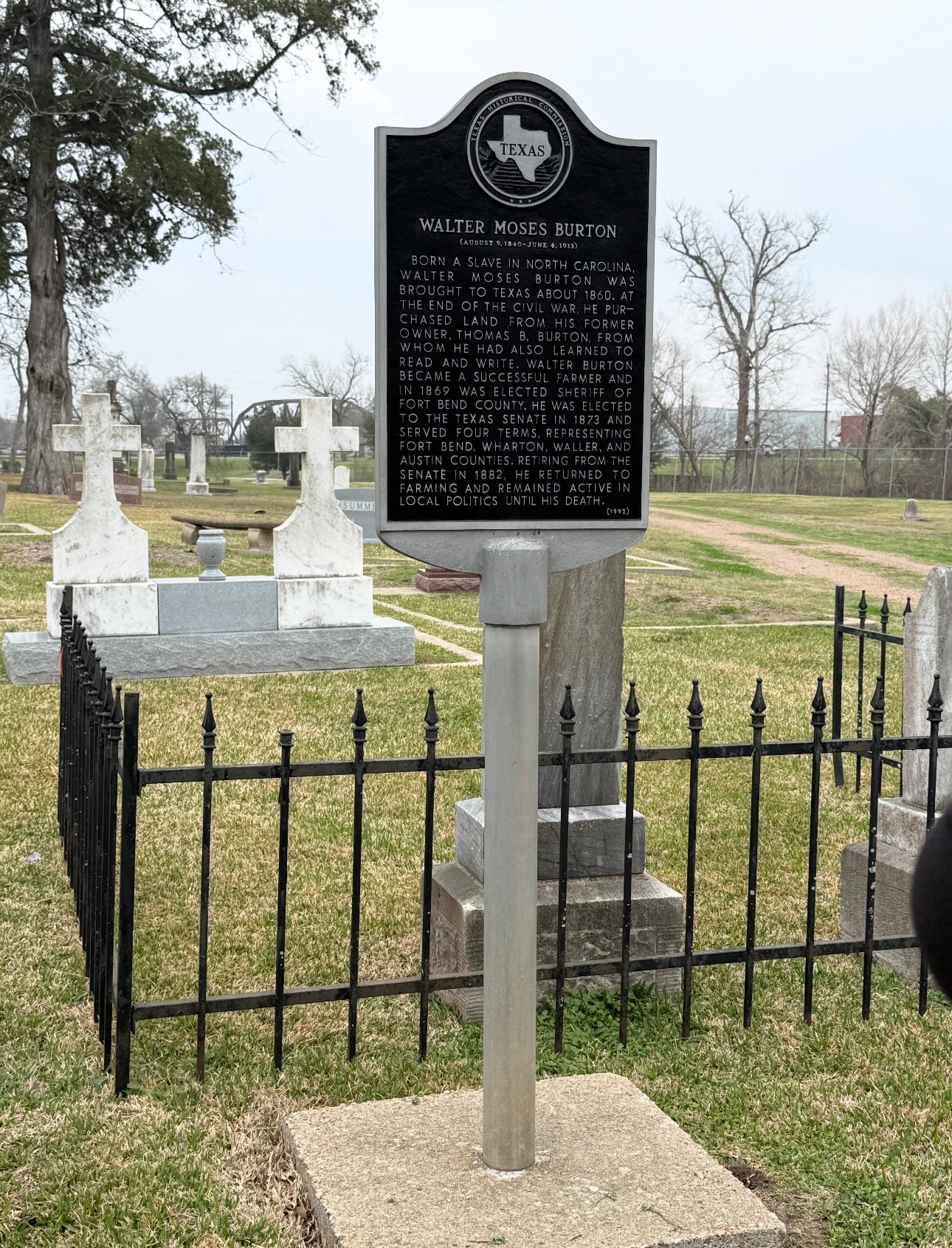
Photo Credit · Caryn Malone
Fort Bend County, TX · 2026
The Moses of the Burton Line
Walter Moses Burton — Son of Ned · First Black Sheriff Elected in Texas
Born c. 1829 or 1840 (disputed) · Fort Bend County, Texas · d. 1913*
Walter Moses Burton was the Mulatto son of Ned Burton — a fact that racist genealogists have refused to document because it connects Walter directly to the Anglo Burton line and to Governor Hutchins Gordon Burton's family. The official story says ... Walter was taught to read and write by Thomas Burke Burton, his Anglo cousin who brought him to Texas. of the mulatto kin in the Burton House After Emancipation, Thomas sold Walter large tracts of land in Fort Bend — launching Walter into immense wealth and political prominence.
Walter became the first Black man elected sheriff in the state of Texas, serving Fort Bend County during Reconstruction. He was also elected to the Texas State Senate, where he served multiple terms and advocated for the rights of freedmen. His election to sheriff — a position of armed authority and legal power — was an act of radical democracy in a state that would spend the next century trying to erase that memory.
The name 'Moses' was a nickname earned — not given at birth. Walter was called Moses because he delivered his people: literacy, land, tax knowledge, political access, and legal protection. Cyrus Burton honored this by naming his firstborn son Moses. That name, and Moses Burton's death certificate from Dallas, is held by the researcher.
Birth Year Discrepancy — Family vs. Record
The family believes Walter was born around 1829 — not 1840 as commonly cited online. If he was born in 1840, he would have been only 10 years old when he arrived in Texas. The family's oral account places him at 21 when he arrived, putting his birth around 1829. His birth year was rarely recorded officially — estimates conflict across census records, recollections, and archival projects including Freedom's Lawmakers.
Chapter V · Pleasant Burton — The Family Legend
The Family Legend
Pleasant Burton — Son of Robert · Nephew of Alfred · The Family's James Bond
He was the family's James Bond. He played double roles — and he played them perfectly.
✦ Correction — Updated Record 9.12.26
Pleasant Burton was the Mulatto son of Robert Burton — Alfred's brother. That makes Pleasant Alfred's nephew, Thomas Burke Burton's cousin, and Walter Moses Burton's cousin by kinship network. He moved between worlds that were not supposed to touch. He could pass when he needed to. He could disappear when danger came. He could reappear in a different county under a different name and no one would know the difference. The family knew. The family remembered.
Pleasant helped guide the migration from North Carolina to Fort Bend, then north to Cox's Two Mile in Milam County. After helping anchor the family in Texas, he made his own move — north to Indiana and Ohio, toward the Ohio River. Indiana was a free state. The Ohio River corridor was familiar territory, connected to the Catawba world he knew from North Carolina.
Why Pleasant Used Aliases
Fullenwider
The Fullenwiders were wealthy, respected, and politically connected — with relatives in both North Carolina and Southern Indiana. Alfred M. Burton and his brother Robert both married Fullenwider daughters, making Pleasant a Fullenwider by kinship. Using this name allowed Pleasant to blend into safe communities along the migration corridor. Slave patrols, sheriffs, and militia units could detain any mixed-race traveler without proof. The Fugitive Slave Act allowed men like Pleasant to be claimed, sold, or forced into labor regardless of free birth. The Fullenwider name provided cover in Unionist pockets where he would not be turned in.
Williams
The Williams name came from Pleasant's own ancestry — Agatha Keeling Williams Burton was Alfred M. Burton's mother, making Williams a name tied directly to Pleasant's kin network. Free People of Color communities in Indiana recognized and protected that name. It opened doors the Burton name could not. Traveling under Burton was dangerous — the Burton name was associated with slaveholding families and political elites. Williams allowed Pleasant to arrive as kin, not as a fugitive.
Burton
When it was safe, he was a Burton. When it was not, he was a Fullenwider or a Williams. The family knew all three. The record only shows fragments.
Why Pleasant Does Not Appear in the Official Record
He could not be named an heir
North Carolina law prohibited naming mixed children as legal heirs. Mixed sons were left out of wills, probate, and estate documents — by law, not by accident.
He was recorded under other surnames
Mixed Burton sons appear in records as Williams, Keeling, Henderson, Fullenwider — or simply as 'Mulatto male,' 'Colored boy,' 'Servant,' or initials only. Pleasant may appear as P. or P.B. Genealogist Mary Hall confirms Pleasant Burton.
Migration erased the trail
When Pleasant left North Carolina, he entered Fort Bend County — where records burned in 1888 — and Milam County, where early records are incomplete. Cyrus appears in Milam County deed books. Pleasant does not.
He passed for white when he needed to
If Pleasant passed, he may appear in white census households, listed as a farm laborer, under a different surname, or not at all. Men who passed often vanish from paper entirely. That is the point.
"To this day I say it with full conviction — cousin Pleasant Burton was one of the three most historically fearless men in this entire lineage." — Oral history, C.A.M. Provenzano
Pleasant himself is not in the documents — but everyone connected to him is. Walter Moses Burton is documented: first Black sheriff in Texas, state senator, present in Fort Bend records. Cyrus Burton is documented: Milam County deed books, 1870s–1890s, bought and sold land, passed it to family. Dover Burton is partially documented: oral histories and some NC records as 'Dove' or 'Judge Dove.' The Smith family is documented: Doyle Shelton Smith ran Gause Colored School; Smiths appear in Milam County records. Everything the family remembered about Pleasant matches the documented behavior of mixed Burton sons who survived by staying off the page.
There is no published genealogical record for Pleasant Burton. But Pleasant Burton fits the historical pattern of mixed Burton sons — protected by white fathers, passing when needed, migrating during danger, living alongside Walter Moses Burton, helping establish Cox's Two Mile, teaching literacy, and transferring land through Cyrus. He exists in oral history, family memory, land inheritance patterns, migration patterns, and kinship networks. Not in official documents. This is normal for mixed Burton descendants. The absence of his name in the record is not proof he did not exist. It is proof the system worked exactly as it was designed to. It was the oral contribution of historian Dr. Dumas Malone who researched Pleasant Burton and shared his findings with Rev. Nathaniel Aaron Burton c. 1960s.
Chapter VI · Dover & Cyrus Burton — The Anchor Line
The Mulatto Kin Line
Dover, Cyrus, and the Burton House Culture
Alongside the Anglo branch, a second Burton line grew — one rooted in mixed ancestry, resilience, literacy, and land stewardship.
Dover Burton — Mulatto Son of Alfred · Known as 'Judge Dove'
Born into the Burton household at Beattie's Ford, Dover was the Mulatto son of Alfred Moore Burton — though his birth was never formally recorded. He was recognized within the family as a man of fairness and wisdom. Oral history remembers him as 'Judge Dove' — not because he held a formal judicial office, but because he served as a community arbitrator, settling disputes, interpreting tax matters, and guiding freedmen through the complexities of early Texas life. Dover was born free. He was reclassified as enslaved for the migration — a legal survival strategy, not a reflection of how he was treated inside the Burton house.
Cyrus Burton — b. 1834 · Son of Dover · Patriarch of Two Mile Bottom
Cyrus Burton was born in 1834 in North Carolina as a Free Person of Color. When Alfred Moore Burton lay on his deathbed, he added Cyrus to his will — a last act of legal protection for a grandson who was biologically part of the Burton line. Cyrus was given to his aunt Clara Kaufman upon Alfred's death. Clara transferred 100 acres to Cyrus — the deed is held by the researcher: February 23, 1892 · Vol. 30, Page 176 · Deed Records, Milam County, Texas. Cyrus did not travel directly to Milam County. The migration moved in stages: from North Carolina into Lee County, Texas first — then west into Milam County, where Cyrus settled at Two Mile Bottom. That land sat on the ancestral territory of the Tonkawa people of the Little River, and on the same ground where the Burton-Smith freedom colony would take root. By the late 1800s, Cyrus held over 200 acres in Milam County —Mortgage free. Operating within the same cotton gin corridor in which Ira Malone Sr., who would later marry Cyrus's granddaughter Lorene, held cotton contracts during Reconstruction. Cyrus and Lucy Williams had three children: Moses Burton, Aaron Burton, and Nancy Burton. Moses Burton died October 23, 1945 in Dallas, Texas — the researcher holds his death certificate. His father is listed on that certificate as Sy Burton (Cyrus), birthplace North Carolina. His mother is listed as Lucy Williams, birthplace North Carolina. The informant who signed the certificate was Addie Burton, same address — his wife at time of death. Moses was a farmer. He was buried at Lincoln Memorial Cemetery, Dallas. Aaron Burton remained in Milam County and continued the land legacy. Nancy Burton married John Henry Smith, anchoring the Burton-Smith family connection. When Cyrus divided his land among his heirs, he left over 35 acres to his granddaughter Lorene Burton — daughter of Aaron — who became Lorene Burton Malone, great-grandmother of the lead researcher.
Chapter VII · The Burton House Culture
The Burton House Culture
"We Do Things Different in the Burton House"
Alfred Moore Burton — 5th great-grandfather of the LPP founder — said it plainly, and Deloris Burton carried it forward in her notes: "We do things different in the Burton house." He meant different from the outside world. Inside the Burton house, Anglo and Mulatto children alike were taught to read and write, to understand tax law, to hold land, and to protect each other.
The Burtons did not place a big emphasis on color. They emphasized Land. Literacy. Law. Strategy. Survival. Kinship. Protection. This is why Pleasant could pass. Dover could navigate. Cyrus could own 200+ acres. Walter could become sheriff and senator. Doyle Shelton Smith could lead the Freedom Colony school. The descendants of this line are literate, resilient, and mixed — by design.
This is the yeoman elite identity. This is the Burton culture. And it was not the Burton family that was racist — it was the colonial system they were navigating. The distinction matters. It is safe. It is true. It is powerful.
Chapter VIII · The Timeline — Generation by Generation
Generation by Generation
The Burton Bloodline — From North Carolina to Texas
Dates marked with * are confirmed by record. Dates marked with ~ are family oral history or researcher estimate. Mulatto children were routinely excluded from birth registries — their absence from the record is itself part of the historical record.
Chapter IX · Freedom Colony Foundations
Milam County, Texas
Freedom Colony Foundations
Freedom colonies (also known as freedmen's settlements or Black settlements) were independent communities founded by formerly enslaved African Americans in Texas between 1865 and 1930. These self-sustaining enclaves provided safety, education, worship, and economic autonomy amid widespread racial violence and discrimination during Reconstruction and the Jim Crow era. Typically rural and agrarian, they were centered around key institutions like churches, schools, and cemeteries. An estimated 557 such colonies existed in Texas, though many have vanished due to land loss, natural disasters, gentrification, and urban development. The Texas Freedom Colonies Project, founded in 2014 by Dr. Andrea Roberts at Texas A&M University, has mapped over 500 of them to preserve their histories and support descendant communities.
Before Emancipation, Burton descendants helped establish and sustain the freedom colonies of Cox's Two Mile, Smith Bottom, and Gause (Colored Community). The Burton, Smith, and Malone families formed a tri-lineage network that provided land, literacy, church leadership (AME, Methodist, Baptist), community arbitration, educational funding, and intergenerational stability.
This was not a single teacher educating a single student — it was a family network building a community.
The Legacy Preservation Project is planning a community trip to Gause, Texas — the town nearest Cox's Freedom Colony — in October 2026. This trip will include documentation, oral history collection, and a donation to the local school in honor of the families who built that community.
October 2026 · Malone/Burton Reunion · Gause, Texas · A Call To Return Home
Documentation, oral history, and a school donation in honor of Cox's Freedom Colony
Chapter X · The Burton–Smith Educational Legacy

The Burton–Smith Educational Legacy
Doyle Shelton Smith — A Life Given to Education
The Burton line connects to the Smith family through Nancy Burton, daughter of Cyrus. Nancy married John Henry Smith, and from that union came a legacy of educators that would shape the Gause community for generations. The most towering figure of that legacy was Professor Doyle Shelton Smith — son of Professor Frank Smith — who served forty years as principal, teacher, and coach of Gause Black School from 1926 to 1966.
Doyle Shelton Smith did not inherit an institution. He built one — day by day, year by year, through Reconstruction's aftermath, through the hostility of Jim Crow, through the construction of the first Black school building in 1937, and through every year that followed until his retirement. His father Frank Smith had carried the educator's title before him. Doyle carried it further.
He was described by those who knew him as a Christian in full communion, humanitarian, philosopher, philanthropist, benevolent, loyal, and peacemaker. His concern for his students, his teachers, and his community was unsurpassed. A road in Gause still bears his name — Prof. Smith — because the community refused to let the memory fade.
What the Burtons Championed
The Burton family's contribution to the Freedom Colony was not only land and a building. They championed three principles that ran through everything they built — principles that gave their kin the tools to survive and thrive long after emancipation:
Education
The Burtons believed that literacy was the foundation of freedom. They supported schools, teachers, and learning in the Gause community before the state would fund it and long after.
Land Ownership
Land was protection. The Burtons transferred land to their kin — free people of color and freedmen — understanding that ownership was the only true security against the sharecropping system designed to keep Black families in perpetual debt.
Tax Literacy
Knowing how to read a tax record, file a deed, and protect property from seizure was survival knowledge. The Burtons passed this down deliberately — it is why Dover 'Judge Dove' Burton was known as a community arbitrator who helped freedmen navigate tax matters and courthouse documents.
Two Smith Lines — Not the Same Family
There are two distinct Smith lines woven through this history. They share a surname and a geography — both rooted in the Gause/Milam County corridor — but they are not the same family, and conflating them erases the record of both.
Smith Line 1 — The Educator Line
Professor Frank Smith was an educator in the Gause community whose son, Professor Doyle Shelton Smith (Aug 1, 1888 – Sept 8, 1970), became the defining figure of Black education in Milam County. Nancy Burton — daughter of Cyrus — married John Henry Smith, binding the Burton legacy to forty years of educational leadership at Gause Black School.
Smith Line 2 — The Burton–Smith Maternal Line
Lilly Smith was the mother of Lorene Burton — daughter of Aaron Burton and granddaughter of Cyrus Burton. Cyrus deeded 35 acres to Lorene directly; the deed record is held by the researcher. Lorene's death certificate names Lilly Smith as her mother, establishing this second Smith line as a maternal branch running through Aaron Burton's household — distinct from the educator Smiths, connected to the Burton land legacy by blood and deed.
Doyle Shelton Smith gave forty years to children who had no other option. That is not a footnote. That is the story.
— Cyndal Malone Provenzano, Legacy Preservation Project
Chapter XI · The Indigenous Connection — Three Bloodlines Become One
The Burton–Malone Indigenous Connection
Where Three Bloodlines Became One
Lorene Burton married Ira Malone Sr., whose lineage traces to the Tonkawa people of the Little River and Two Mile Bottom. This union blended Burton literacy, Smith educational leadership, and Malone Indigenous heritage.
Their descendants carried forward the Burton tradition of tax literacy, community service, land stewardship, and intergenerational leadership.
Lorene Burton was not simply a wife. She was the living bridge between two of the most documented Indigenous and freedom colony families in Milam County. Through her marriage to Ira Malone Sr., the Burton legacy and the Malone legacy became one story. To follow the Malone line, visit the Malone Family page.
Visit the Malone Family Page →This tri-racial Mestizo identity is not a footnote — it is a strength.
Chapter XII · Legacy Summary
A Legacy of Literacy, Land, and Love
Across Generations, the Burtons Refused to Be Divided
Across generations, the Burton family — Anglo, Black, and Indigenous — shared land, knowledge, responsibility, kinship, protection, education, and leadership. They defied the racial boundaries of their era.
They protected each other. They built communities. They taught literacy when it was forbidden. They passed down land when it was dangerous. They preserved family ties when society tried to erase them.
A Word of Caution
Before You Test
The Burton family's Indigenous ancestry is documented through colonial records, land history, and oral tradition — not through a commercial DNA test. If you are considering testing to verify what you find here, the Legacy Preservation Project has documented, peer-reviewed reasons why those results may mislead you. We call them DNA Casinos. Here is why.
Read the Full Research →Why This Story Belongs in Legacy Preservation
A Model for Every Family Seeking to Reclaim What Was Lost
The Burton story is not about one person. It is about a family that refused to be divided, even when the law demanded it.
It is historically grounded, spiritually meaningful, culturally blended, resilient, dignified, intergenerational, and rooted in land, literacy, and love.
It is a model for every family seeking to reclaim what was lost, hidden, or misclassified. And now, through the Legacy Preservation Project, it is preserved — not as a personal spotlight, but as an example of how families can rise above erasure and reclaim their truth.
The Braided Bloodline
The Burton family history does not exist in isolation. It braids together with the Malone family — Tonkawa-descended, misclassified as Mulatto on the 1850 census — and the Smith family of Smith Bottom. These three families, across three racial classifications and two centuries, form the core of the research documented in Braided Bloodlines: The Ethnogenesis of the Malones, Burtons, and Smiths of East Central Texas, by Cyndal Malone Provenzano. Pre-sale opens December 2026.
This History Is Still Being Written
The Burton family page will expand as research continues. If you have documents, photographs, oral histories, or family connections to the Burtons, Malones, or Smiths of Milam County — we want to hear from you.
Contact the ResearcherContinue Exploring
Archival Privacy Notice
Manuscript collections and archival records may contain materials with sensitive or confidential information protected under federal or state right to privacy laws and regulations, the North Carolina Public Records Act (N.C.G.S. § 132‑1 et seq.), and Article 7 of the North Carolina State Personnel Act (Privacy of State Employee Personnel Records, N.C.G.S. § 126‑22 et seq.). Researchers are advised that the disclosure of certain information pertaining to identifiable living individuals represented in this collection without the consent of those individuals may have legal ramifications — for example, a cause of action under common law for invasion of privacy may arise if facts concerning an individual's private life are published that would be deemed highly offensive to a reasonable person — for which the Legacy Preservation Project (LPP.org) assumes no responsibility.