
Historical Record · Legacy Preservation Project
Dumas Malone
The Historian. The Contradiction. The Friendship That History Didn't Write Down.
Pulitzer Prize-winning biographer of Thomas Jefferson. Methodist. Virginian. A man shaped by the racial assumptions of his era — and yet, privately, a trusted colleague of an AME Methodist preacher from Texas whose sister was married to an Indigenous Malone.
Who He Was Not
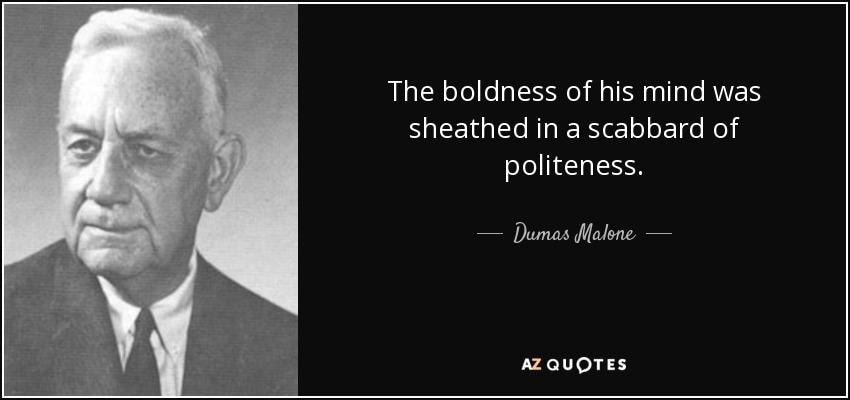
Rev. Dr. Dumas Malone was not a blood relative of the Malone family. He was a family friend — more of a dear frenemy and debate buddy — but he was well respected and warmly received by Rev. Nathaniel Aaron Burton and his wife, First Lady Deloris Burton, M.A. Dumas was born January 10, 1892, and died December 27, 1986, in Coldwater, Mississippi. He spent the better part of a century becoming the foremost authority on Thomas Jefferson. Many of his long-distance telephone debates with Rev. Burton concerned the historical Sally Hemings or a Mormon researcher and historian referred to as “Fawni” — Fawn M. Brodie, Dumas’s nemesis. The Burtons knew Dumas in the most peculiar way, and the same could be said of the Burtons from Dumas’s perspective. As Aaron Burton put it, “He always ‘wanna’ know too much.” At the end of the day, they were two theologians who, despite their accomplishments and differing points of view, enjoyed bouncing opinions off one another. His six-volume biography, Jefferson and His Time, took forty years to complete and earned him the Pulitzer Prize in 1975. He was a professor at Harvard, Columbia, and the University of Virginia. He edited the Dictionary of American Biography. By every institutional measure, he was one of the most important American historians of the twentieth century.
He was also a man of his time — shaped by the racial architecture of the Deep South, the mythology of the Founding Fathers, and an academic culture that treated Indigenous and mestizo history as peripheral, oral tradition as unreliable, and the private lives of white founders as sacred ground.
★ LPP Note — Documented Facts
Dumas Malone spent decades defending Jefferson against the claim that Jefferson had fathered children with Sally Hemings. He was wrong. The evidence confirmed the Hemings line in 1998, twelve years after Malone's death. His defense of Jefferson was not simply scholarly caution — it was the protection of a mythology he had spent his life constructing. That is the honest record.
The Contradiction at the Heart of the Man
Here is what historians rarely say plainly: Malone could be racist and still be genuinely fascinated by Indigenous and mestizo history. He could deny Sally Hemings and still honor the oral traditions of preachers from Texas Methodist freedom colonies. He could reject certain truths and still respect certain people.
His racism was not about individuals — it was about protecting a mythology. Jefferson had to remain pure. The Founding narrative had to remain unbroken. Pleasant Burton didn't threaten that mythology. Reverend Nathaniel Aaron Burton didn't threaten it. Sally Hemings did. Researcher Fawn Brodie did also. She angered Dumas with venom because her research argued that Thomas Jefferson had a long-term sexual relationship with Sally Hemings. Aaron being from a freedom colony, mixed race, landed gentry agreed with Fawn on many occasions. "He fondly called Fawni". It would tick BOTH Malone & Burton off to no end for roughly 9 months to a year. Per Mrs. Burton, the friendship lasted for over 10 years. That distinction explains everything about who Malone chose to trust, and who he chose to silence.
Men like Dumas Malone — and Nathaniel Aaron Burton — believed in their own racial hierarchy. They believed in proper order. One believed in white intellectual authority and the myth of pure American founders. One believed in equality despite skin color and that intellectual authority was gifted inalienably by GOD and not founders. They respected intelligence. They respected memory. They respected Methodist denominations, networks, frontier survival stories, and personal honor. They could hold both things at once, because that is what their world required of them.
LPP Research Note: This is not a defense of Dumas Malone's racial views. It is an honest accounting of how unlikely friendships form in the South — and why they matter to the historical record. The friendship between Malone and Reverend Burton is documented through family oral and physical history. It was through the research of Dumas Malone that the chain of custody of the Mario Malone / 1803 knowledge, physical existence of Pleasant Burton (HARVARD PRESS) & his place in history... have been archived with the artifact described below. It is preserved here because families KNOW what institutions do not.
A Friendship That Defied Easy Categories
At Methodist conferences in Detroit — where Dumas and his aging father, also an ordained Methodist preacher, first met Rev. Nathaniel Aaron Burton — the two men formed a unique bond that made little sense on paper and perfect sense in private. Dumas had his one “Black” friend over the years, and Aaron had his one white friend. Dumas was fascinated by mixed Southern heritage, especially families with documented mixed-race and landed-gentry histories. Aaron had both, as well as a sister with a surname he barely tolerated: Malone. Their friendship was a “two-for.” His last visit to Texas was in 1976. Though much older, he was coming off the most important event of his lifetime, and he left Aaron’s wife with a memorable parting gift from that event.
Malone was a white Southern academic. Aaron was a Methodist preacher with deep historical memory, connected to a lineage that carried knowledge. What Malone had in institutional authority, Burton had in oral history and tradition. What Burton had in family memory, Malone had the ability to cross-reference through access to high-profile records and catalogues, including Catholic Church records from Mexico City and materials from the Texas frontier.
Publicly, the friendship would have been judged, particularly within Burton’s community. Aaron felt pressure that the Black community might question their association. The Methodist hierarchy of that era would have found the closeness of the exchange uncomfortable. So the brotherhood was kept quiet — not because either man was ashamed of the other, but because the world they lived in could not hold it. Mostly, they laughed and got into heated arguments.
It was through that Methodist friendship — scholar to minister, peer to peer — that Malone’s work as a historian, researcher, scholar, and academic helped validate what the family had carried forward. His access to official Mexican Catholic records from the Pricidio and Texas frontier materials supported the family’s understanding of Malone ancestry and its Ervipiame connection. The record also points to surname variations: Malone family members appear in Indian records under similar pronunciations, including entries described as “Indio” on the Dawes Rolls and in the National Archives Indian Census Rolls (M595), spanning 1886 to 1939.
That research did not stand alone. A hotel notepad from Mexico, marked “Mario Malone / 1803,” fell from Ester Oranzle Malone’s Bible, becoming a physical family record alongside the 1976 Queen Victoria coin. Together, the scholar’s verification, the family’s oral history, and these preserved artifacts form the thread that leads into the record. Through Reverend Nathaniel Aaron Burton, the knowledge was received and carried forward by his wife, 1st Lady, Deloris Burton M.A., the family’s respected friend and keeper of this history.
The 1976 Bronze Coin — A Physical Record
In the summer of 1976, Queen Elizabeth II visited Virginia as part of the United States Bicentennial celebration. It was a formal, historic occasion — and Dumas Malone, then in his eighties and at the height of his reputation, was among those present in the cultural and historical circles surrounding the visit.
That summer, Malone gave Deloris Burton a 1976 bronze commemorative medallion — along with several of his books. The coin still exists. It is in its original case. It passed from Deloris to the researcher in 1984.
Physical Artifact on Record: 1976 bronze commemorative medallion, original case intact. Given by Dumas Malone to Deloris Burton, summer 1976, Virginia. Passed to Cyndal Malone Provenzano, 1984. Current location: family keeping.
A commemorative bronze medallion from the Bicentennial was not a casual gift. Only select historians, archivists, and cultural representatives received them. For Malone to give one to Deloris Burton — along with his books — means he respected her. He trusted her. He saw her as part of the historical story, not outside it. He wanted her to have something from the official world of history, because he understood that her family's memory was part of that history, even if the institutions around him would never have said so.
That is the contradiction made physical. A man shaped by the racial assumptions of his era, giving a woman whose family carried Indigenous and mestizo memory a symbol of American historical recognition — because in private, he knew what she carried.
Why This Record Belongs Here
The Legacy Preservation Project exists to record what institutions leave out. Dumas Malone's published work does not mention Reverend Nathaniel Aaron Burton. It does not mention the Malone family of east-central Texas. It does not mention the Ervipiame, the Tonkawa, or the oral tradition that passed through Methodist conference halls in Detroit.
But the coin exists. The books exist. The hotel notepad exists. The knowledge passed — from Malone to Burton to Deloris to a Bible to a researcher at eighteen years old — and it exists.
Malone spent his career protecting Jefferson's mythology. He was wrong about Hemings. He may have been wrong about other things. But he was right about the Malones — and he trusted the right people to carry that knowledge forward, even when he could not say so publicly.
That is the messy, human, uncomfortable truth that historians rarely write down. Families remember it. This project writes it down.
Chain of Custody: Dumas Malone → Rev. Nathaniel Aaron Burton → 1st Lady, Deloris Burton M.A. → Rev. Cyndal Malone Provenzano (1984, age 18). A paper note fell from Ester Oranzle Malone’s family Bible: a hotel notepad from Mexico, written “Mario Malone / 1803.” A bronze medallion, given to 1st Lady, Deloris Burton M.A. in Virginia in 1976, remains in its case.
The coin is still in its case.
The knowledge is still in the family.
The record is written here.