
The Orginal Tonkawa
Tonkawa — the language, homeland, origins, culture, and the direct connection to the Malone family line of Milam County, Texas.
This page is part of a living research archive. LPproject.org is actively used by researchers and educators as a teaching tool and as living proof of documented Indigenous heritage. The Tonkawa record is among the most fragile in this archive — oral tradition, expulsion, and deliberate erasure left gaps that written records alone cannot fill. We hold ourselves to the truth as closely as the record allows — and when the record corrects us, we correct the page. Dates, relationships, and interpretations on this page may be updated as new evidence emerges. That is not a weakness. That is the work.
Historical context
Community, continuity, and remembrance.
This page centers Tonkawa history while distinguishing documented records, family oral history, and broader historical context.
A Distinct People with a Unique Voice
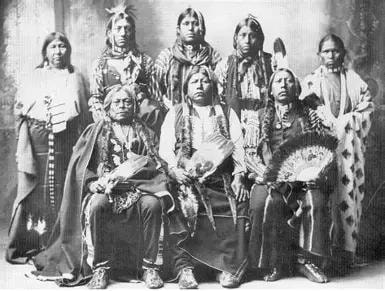
The Tonkawa were a small Indigenous nation of central Texas whose ancestors belonged to several interconnected bands. They spoke a language isolate — meaning their language was not closely related to any other known Indigenous language. This marks them as a distinct cultural group, not an offshoot of larger nations.
The Tonkawa did not originally call themselves "Tonkawa." Their own name was Tickanwa•tic — meaning "real people." The name Tonkawa came from the Waco, a Wichita-speaking group, who observed something distinct about how this nation lived: though they moved in many small bands across a vast territory, they always reunited, camped together, and acted as a single confederation. The Waco called them Tonkaweya — "they all stay together." That name was adopted by Spanish, French, and later Anglo-American record-keepers, and it held. This is the accepted linguistic origin across modern scholarship.
Oral legacy from renowned Harvard historian Rev. Dr. Dumas Malone. "Museum Bob"
The Land The Family Comes From
The Tonkawa's traditional territory stretched across the Edwards Plateau and the river corridors of central Texas — following the Brazos, Colorado, and Little River systems through land that today carries the names of Milam, Williamson, Bell, and Travis Counties. To understand the scale of this homeland, it helps to understand the geography.
Milam County, (originally Viesca Mexico) drawn in 1836, occupied roughly one-third of the entire Texas land mass. It was huge. It was one of the original 23 counties; created when Texas became a republic — and its boundaries were so vast that over time, the state carved it into 47 separate counties. Bell County was split off in 1850. Falls County in 1850. Williamson County in 1848. Robertson County drew from early Milam boundaries as early as 1837. What are today understood as distinct, separate counties were once a single, enormous jurisdiction — all of it Tonkawa homeland.
The confluence of the Little River and the Brazos — the place their ancestors called Natan Samox, and the family today calls Sugarloaf Mountain — sits at the geographic heart of this original territory. When the Tonkawa moved through these river corridors, they were not crossing county lines. There were no county lines. There was only the land, the water, and the people who had lived there for generations.
A Confederation, Not ONE Single Tribe
As stated, Tonkawa were not originally one tribe. They formed from several smaller bands who lived together, intermarried, and shared cultural practices over centuries. By the 1700s, these groups had merged into a single people recognized collectively as Tonkawa.
Bands that merged to form the Tonkawa:
- Tonkawa — the core band
- Ervipiame / Erivipame — the Malone line
- Yojuane
- Mayeye
- Other Coahuiltecan-speaking groups
The Ervipiame were Coahuiltecan-speaking people, originally located in northeastern Coahuila, Mexico and southern Texas — from the Rio Grande north through the Edwards Plateau to the Brazos River. Over time, they merged into the Tonkawa identity, becoming one of the core groups of the nation.
Why this name is important ~Ranchería Grande
A major part of Tonkawa history can be found in the "Ranchería Grande" — Historically a large multi-tribal settlement along the Brazos River, Little River and Red Mountain (Sugarloaf Mountain, today) in the early 1700s. This is where the Ervipiame, Yojuane, Mayeye, and Tonkawa bands lived together and eventually unified. This settlement is the historical foundation of the Tonkawa identity the Malone lineage carries.
The Brazos River corridor — the same waterway that runs through Milam County, past Natan Samox — was the center of this unification. The Malone family's land was not on the edge of Tonkawa territory. It was at its heart.
★ LPP Note
Fact: Blood quantum theory is an outright false practice — simply because it was invented by Anglo colonizers as a bureaucratic tool to shrink Native identity and their populations over generations. It was never designed to measure culture, belonging, or Indigenous nationhood. It was designed to insure Original Native people disappeared on paper. Thus, the term "Paper Genocide."
How The Ancestors Lived
Highly mobile hunters and gatherers
Skilled trackers and scouts who moved seasonally across the plateau and river corridors.
Deep knowledge of the land
Experts in buffalo hunting, deer hunting, and seasonal foraging — plants, waterways, and terrain.
Material culture
Makers of painted hides, woven mats, and lightweight shelters suited to mobile life.
Social structure
Extended families, shared leadership, flexible bands, and strong kinship networks — which is why oral history within these communities carries such precise genealogical detail.
Diplomacy and Adaptability
The Tonkawa were known for diplomacy and adaptability — traits that helped them survive enormous pressure from colonization and displacement. Historically, they interacted with Spanish missions (often as allies or guides), Lipan Apache (sometimes allies, sometimes rivals), Comanche (frequently in conflict), and early Texas settlers (often as scouts or intermediaries).
Mario Malone's ability to hold land titles, navigate colonial administration, and move between worlds was not an anomaly. It was a Tonkawa trait — refined over generations of living at the intersection of competing powers.
The Whitening of Today's Tonkawa
Today, the Tonkawa descendants are recognized as the Tonkawa Tribe of Indians of Oklahoma, based in Tonkawa, Oklahoma. The tribe has whitened considerably over the years.
Many families in central Texas — especially Milam County, Little River, and Two Mile — descend from Tonkawa, Karankawa, Lipan Apache, Comanche, and Caddo ancestry. These were people who remained in Texas rather than being forcibly relocated and removed by Anglo settlers. They stayed. They blended. They survived.
LPP Research Note
The Malone family's oral record — confirmed through Methodist fellowship between Dr. Rev. Dumas Malone and Reverend Nathaniel Aaron Burton — places the Malone line squarely within this Ervipiame-Tonkawa tradition. The 1803 baptism at Nacogdoches did not erase that identity. It created a NEW ONE.
The Tonkawa Tribe of Oklahoma and Sugarloaf Mountain
The Tonkawa Tribe of Oklahoma is a federally recognized tribe whose legal status comes from 19th‑century U.S. policies that relocated Indigenous groups away from their homelands. Because of this federal recognition, the Oklahoma Tonkawa have the ability to purchase land anywhere in the United States as a sovereign tribal entity — including land in Texas.
Texas, however, is unique. The state has no treaties with any tribes and does not grant special rights or protections to Indigenous nations within its borders. This means that ANY federally recognized tribe can buy land in Texas the same way a private corporation or individual can — even if that tribe's ancestors did not originate from that land.
Sugarloaf Mountain — a site with deep historical and cultural significance to the original Tonkawa-related bands of central Texas, including the Ervipiame, Yojuane, Mayeye, and other Ranchería Grande peoples — was purchased by the Oklahoma Tonkawa Tribe under ordinary real‑estate law. The purchase was not based on ancestral claim, historical connection, or Texas‑based recognition. It was a land transaction made possible by federal status.
Why This Raises Concern
For many descendants of the original Texas Tonkawa bands, this situation highlights a long‑standing problem in U.S. Indian policy:
- Federal recognition was granted to the relocated group — not to the native families who remained in Texas.
- The Oklahoma Tonkawa represent only one branch of the historical Tonkawa confederation, yet they hold exclusive federal authority over the name "Tonkawa."
- Native Pre Tex/Mex descendants, despite being legitimate heirs to the original bands, have no pathway to recognition or representation.
This creates a system where a federally recognized tribe can purchase culturally significant land in Texas, while the descendants of the original Texas bands have no legal standing to challenge, participate, or even be acknowledged in the process.
★ LPP Note
The Tonkawa Tribe of Oklahoma purchased Sugarloaf Mountain through ordinary real‑estate law — not through ancestral claim or Texas‑based recognition. Because Texas has no treaties with tribes, federally recognized nations can buy land in the state even if their ancestors did not originate there. For descendants of the original Texas Tonkawa bands, this reflects a larger issue: federal recognition empowered the relocated group while erasing the communities who remained in their homeland.